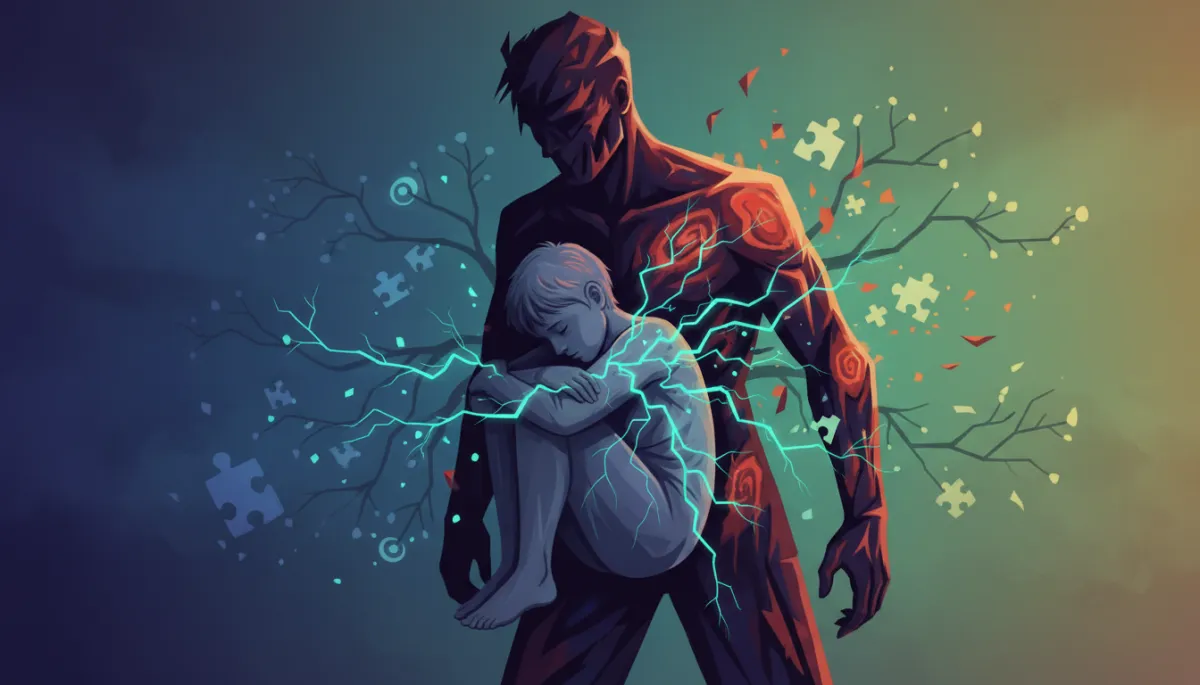
Adult Bullying & Childhood Trauma: Emotional Reactivation
Mental Health, Adult Bullying, Childhood Trauma, Trauma Recovery
Adult Bullying and Childhood Trauma: Understanding Emotional Reactivation Like a Debugging Process
As a senior software engineer who has led teams, reviewed code, and sat in more stand‑ups than I can count, I’ve seen a lot of subtle and not‑so‑subtle Adult Bullying in the workplace. If you’re reading this because you’re being targeted—or still carrying the emotional impact of past bullying—please know this: what you’re feeling is real, it is valid, and it makes deep psychological sense, especially if you carry Childhood Trauma. This article gently unpacks how Adult Bullying can reactivate old wounds, what Emotional Reactivation looks like in day‑to‑day life, and how Trauma Recovery through trauma‑informed therapy can help you begin to heal, using some programming analogies along the way to make the inner dynamics a bit clearer and less frightening.
Seeing Adult Bullying Through a Trauma‑Informed Lens
In tech we love to measure impact: latency, throughput, error rates. But the Psychological Impact of Adult Bullying is harder to quantify, especially when it silently hooks into old Childhood Trauma. You might tell yourself, “It’s just work,” or “I should be able to handle this,” while your body reacts like you’re in a life‑or‑death incident. That’s not weakness. That’s your nervous system doing exactly what it was trained to do long ago to keep you safe.
Adult Bullying can look like:
public shaming in meetings or chat channels
constant nitpicking or “joking” at your expense that never stops when you set a boundary
exclusion from key discussions, projects, or social events as a form of punishment or control
subtle threats about your job security or reputation when you speak up
On the surface these may look like “communication issues” or “personality clashes,” but when they’re persistent and power‑loaded, they form a pattern: Bullying Dynamics. For someone with Childhood Trauma, those dynamics don’t just hurt in the present; they can reopen old attachment wounds and survival strategies in a way that feels overwhelming and confusing.
1. The Connection Between Adult Bullying and Past Wounds
When today’s conflict calls yesterday’s pain
Think of your nervous system as a legacy system with code written in your earliest years. Childhood Trauma—whether from school bullying, emotional neglect, harsh criticism, or outright abuse—writes low‑level routines that prioritize survival over comfort. When a present‑day bully raises their voice, rolls their eyes, or threatens your status, it’s like calling an old function that was written when you were small and powerless.
In real life, legacySurvivalMode might look like freezing in meetings, apologizing for things that aren’t your fault, over‑explaining, or staying late to “prove” your worth. These are not character flaws; they are old strategies that once helped you survive Childhood Trauma and are being reactivated by Adult Bullying.
Why it feels “disproportionate” (and why that’s a myth)
You might notice people around you shrug off similar behavior, while you feel devastated, panicked, or deeply ashamed. You may even judge yourself for “overreacting.” From a trauma‑informed perspective, your reaction is not to this moment alone. It’s to a stack trace of moments stretching back through time—every time you were mocked, ignored, or punished for speaking up as a child. Adult Bullying often mirrors those early power imbalances, making the present feel like the past all over again.
💡 Gentle Reframe: If your response feels “too big,” it’s likely because the event is touching something very old and very tender—not because you’re weak or broken.
Bullying Dynamics and attachment wounds
Many forms of Childhood Trauma are relational: a caregiver who was unpredictable, a teacher who humiliated you, peers who excluded or attacked you. These experiences teach your nervous system that relationships are unsafe and that love or acceptance is conditional. As an adult, when a manager or teammate uses Bullying Dynamics—hot‑and‑cold behavior, silent treatment, or public praise followed by private cruelty—it can reactivate attachment wounds that say:
“If I make a mistake, I’ll be abandoned.”
“I have to be perfect to be safe.”
“My needs don’t matter.”
This is the heart of Emotional Reactivation: the present event is painful, but the pain is multiplied by layers of unprocessed history. Understanding this connection is the first step toward Trauma Recovery, because it helps you move from self‑blame to self‑compassion.
2. Symptoms of Emotional Reactivation: How It Shows Up Day to Day
Emotional symptoms: when your feelings “compile” all at once
Emotional Reactivation can be intense and confusing. You might notice:
sudden waves of shame after a comment or email, even if others say it was “no big deal”
disproportionate fear of meetings, code reviews, or 1:1s with the bully or authority figures in general
feeling like a small child again—helpless, voiceless, or desperate to please
You might also experience emotional numbness: a shutdown state where you feel nothing because feeling anything would be too overwhelming. In trauma language, this is a protective freeze response, not a failure on your part to “care enough.”
Physical and nervous‑system symptoms: your body as error logger
The Psychological Impact of Adult Bullying doesn’t stay in your head; it shows up in your body. Common signs of Emotional Reactivation include:
racing heart, tight chest, or shallow breathing before or after interactions with the bully
difficulty sleeping, replaying conversations like an endless log file you can’t clear
digestive issues, headaches, or chronic tension in your neck and shoulders
Your nervous system may be stuck in a loop of fight, flight, or freeze. It’s as if some background service keeps restarting under load and never returns to a stable idle state. This is not “in your head” in the dismissive sense; it’s literally in your entire body, which has learned to equate certain tones, postures, or expressions with danger based on past trauma.
Cognitive symptoms: when your brain starts gaslighting itself
Emotional Reactivation can also affect your thinking. You might notice:
intrusive thoughts like “I’m useless,” “I’m going to get fired,” or “Everyone secretly hates me”
difficulty concentrating, reading code, or making small decisions because your brain is stuck in threat‑scanning mode
second‑guessing your perception: “Maybe I’m imagining it,” “Maybe it really is my fault”
These thoughts are like malware installed by past experiences of bullying or neglect. Adult Bullying acts as a trigger that re‑executes those scripts. Trauma‑informed work doesn’t just say “think positive”; it helps you understand where these beliefs came from and gently refactor them over time.
Behavioral symptoms: survival strategies in disguise
You might also notice changes in your behavior that are actually attempts to stay safe:
overworking, taking on too much, or never saying “no” to avoid conflict or criticism
withdrawing from teammates, skipping social events, or keeping your camera off to feel less visible
people‑pleasing: agreeing with things you don’t believe or laughing along with harmful jokes
Again, these are not moral failures. They are the nervous system’s best attempt at protecting you using patterns learned in Childhood Trauma. Recognizing them with compassion is a powerful step toward Trauma Recovery.

A safe therapeutic space can help untangle old trauma patterns from present-day bullying.
3. Pathways Toward Healing: Trauma‑Informed Therapy as a Refactor, Not a Rewrite
What “trauma‑informed” really means
Trauma‑informed therapy doesn’t treat your reactions as bugs to be fixed; it treats them as understandable responses to overwhelming experiences. A trauma‑informed therapist will:
prioritize safety and consent in every session, moving at a pace that feels manageable to you
help you connect current Adult Bullying experiences with earlier Childhood Trauma without blaming you for either
work with your body and nervous system, not just your thoughts, to reduce Emotional Reactivation
Instead of demanding that you “just stand up for yourself,” trauma‑informed therapy recognizes that your system may need to feel safer internally before assertiveness is even possible. In coding terms, it’s like stabilizing the runtime environment before deploying a new feature.
Step 1: Naming the pattern without self‑blame
One of the first healing steps is simply naming what’s happening: “I’m experiencing Adult Bullying, and it’s reactivating Childhood Trauma.” Putting words to this can feel like adding meaningful log messages to a failing system—you finally see what’s going on instead of silently crashing. You might even journal about it using a structure like this:
Of course, you don’t need to literally write JavaScript in your journal, but thinking in this structured way can help you separate what happened from what it triggered inside you—an important distinction in Trauma Recovery.
Step 2: Stabilizing the nervous system (grounding and regulation)Before diving into deep Childhood Trauma memories, trauma‑informed therapists typically focus on helping you regulate your nervous system. This might involve:
grounding exercises: feeling your feet on the floor, noticing five things you can see, four you can touch, and so on
paced breathing: extending your exhales to signal safety to your nervous system
gentle movement: stretching or walking to discharge fight‑or‑flight energy
Think of these as small but powerful utilities—helper functions that keep your system from overheating while you work on deeper patterns. They don’t make the Adult Bullying okay, but they give you a bit more internal space to choose how to respond rather than being completely hijacked by Emotional Reactivation.
Step 3: Processing Childhood Trauma safely
Over time, with enough safety and regulation skills, trauma‑informed therapy may gently revisit Childhood Trauma experiences that continue to influence your reactions today. Approaches like EMDR, somatic therapies, or trauma‑focused CBT can help your nervous system update its internal models: “That was then, and this is now. I am not that helpless child anymore.”
In code terms, you’re not deleting the old functions; you’re writing new ones and gradually updating the call sites. The past will always be part of your story, but it doesn’t have to run the entire system anymous.
Healing doesn’t mean you’ll never feel triggered again. It means that over time, you have more options than just the legacy path—and more compassion for yourself when the old code still runs.
Step 4: Building external safety and boundaries
While inner work is crucial, Trauma Recovery also involves real‑world changes. Adult Bullying is not just a “mindset issue”; it’s a relational and often organizational problem. With support, you might explore:
documenting incidents: dates, times, witnesses, and specific behaviors—not to obsess, but to have clarity if you choose to report it
setting boundaries: calmly stating what behavior is not acceptable and what you will do if it continues (e.g., escalate, leave the meeting)
seeking allies: HR, trusted colleagues, mentors, or external support networks in your field
A trauma‑informed therapist can help you plan these steps in a way that respects your safety, your financial realities, and your emotional capacity. Sometimes the healthiest boundary is ultimately leaving a toxic environment; other times it’s reshaping the dynamics with support at your back rather than facing it alone.
Bringing It Together: You Are Not the Problem the System Is Debugging
If Adult Bullying is reactivating Childhood Trauma for you, it can feel like you’re constantly failing some invisible test: not resilient enough, not confident enough, not “professional” enough. The truth is much kinder and more accurate: your reactions make sense given what you’ve lived through. The Emotional Reactivation you’re experiencing is not a sign of weakness; it’s a sign that your system learned to survive in hard conditions and is still trying to protect you, even if its methods are now outdated and painful.
Understanding the connection between Adult Bullying and past wounds helps you step out of self‑blame and into curiosity: “What is this reminding me of?” “What did I learn back then that’s still running now?” Recognizing the symptoms of Emotional Reactivation—emotional, physical, cognitive, and behavioral—gives you a language for what’s happening instead of just feeling “broken.” And walking a Trauma Recovery path through trauma‑informed therapy offers a way to gently refactor those old patterns, honoring why they existed while slowly building new, kinder ones.
📌 Key Takeaway: You are not overreacting; you are reacting to a lifetime of experiences. With the right support, those reactions can soften, and your life—and work—can feel safer and more spacious.
Gentle Next Steps If This Resonates With You
Consider reaching out to a trauma‑informed therapist and mentioning Adult Bullying and Childhood Trauma specifically; this helps them understand the context of your pain.
If it feels safe, share your experience with someone you trust—a friend, partner, or mentor. Being believed is itself healing.
Start small self‑care “commits”: short walks, breaks away from the screen, gentle grounding during or after difficult interactions.
You deserve workplaces and relationships where your nervous system doesn’t have to run in constant high‑alert mode. You deserve respect, psychological safety, and room to grow. Adult Bullying may have reawakened old pain, but with trauma‑informed support, it can also become a turning point—a moment where you decide that your wellbeing matters, not as a feature request, but as a core requirement of your life’s architecture.
