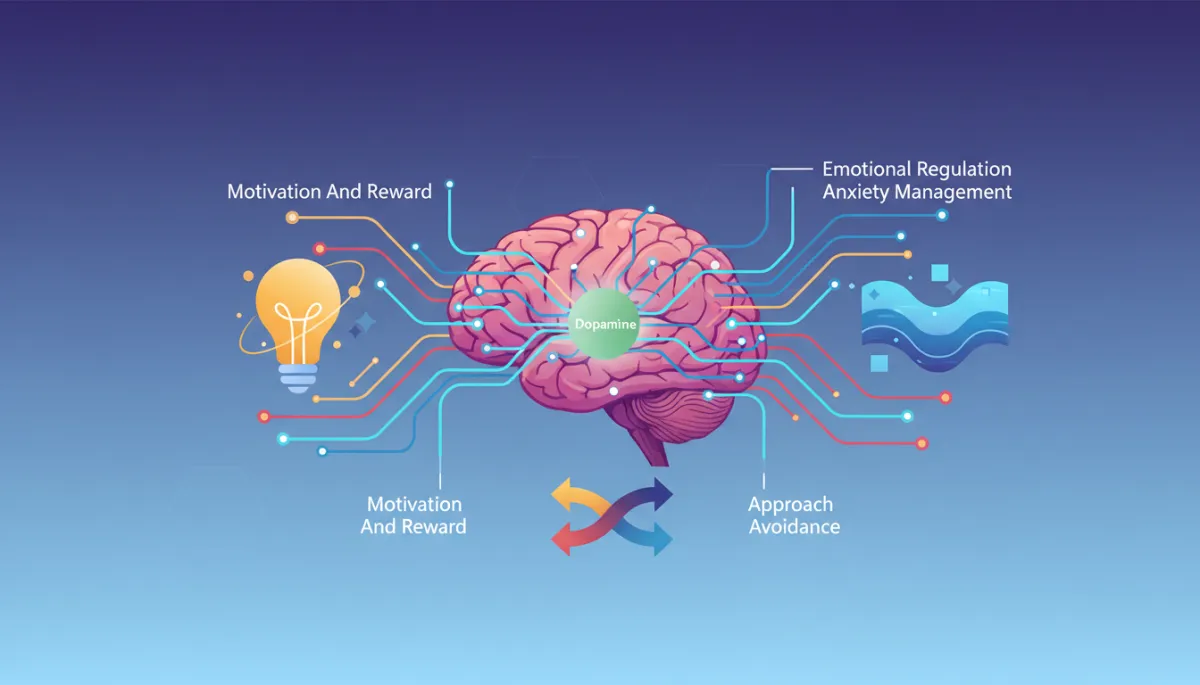
The Dopamine Connection: Beyond Motivation & Reward
Mental Health, Brain Chemistry, Dopamine
The Dopamine Connection: More Than Motivation and Reward
Dopamine is often called the “feel-good chemical,” but that label barely scratches the surface. This powerful messenger in your brain quietly shapes your motivation, emotional regulation, anxiety levels, and even how you approach or avoid challenges in daily life. Understanding dopamine won’t turn you into a neuroscientist overnight, but it can give you practical tools to manage your mood, habits, and mental health more wisely.
What Exactly Is Dopamine?
Dopamine is a neurotransmitter—a chemical messenger that helps brain cells communicate. It is central to your brain chemistry, especially in circuits that control movement, motivation, reward, attention, and learning. When you anticipate something rewarding, like a favorite meal or a meaningful goal, dopamine activity often increases, nudging you to move toward that experience.
But dopamine is not just about pleasure. It is more about signaling importance. It helps your brain decide, “This matters. Pay attention. Move toward it.” In this way, dopamine links your internal world—your thoughts, feelings, and values—to your external actions and habits. When dopamine systems are well-balanced, you tend to feel motivated, emotionally steady, and able to manage stress. When they are out of balance, you might notice low drive, mood swings, anxiety, or difficulty following through on your intentions.
Dopamine and Brain Chemistry: A Simple Tour of Key Pathways
To see how dopamine shapes your experience, it helps to know a few of the major brain chemistry pathways it travels along. You do not need to memorize the names, but understanding their roles can make your own feelings and behaviors easier to interpret:
Motivation and reward pathway (mesolimbic): Often called the brain’s “reward circuit,” this pathway links deep brain structures involved in emotion with areas that process pleasure and reinforcement. When you achieve something meaningful or experience a positive surprise, dopamine surges here help encode that moment as rewarding, so you are more likely to seek it again.
Planning and focus pathway (mesocortical): This pathway connects dopamine-rich areas to the prefrontal cortex, the region behind your forehead involved in decision-making, self-control, and long-term planning. Healthy dopamine activity here supports sustained attention, emotional regulation, and the ability to stick with tasks even when they are not immediately fun.
Movement pathway (nigrostriatal): This system helps coordinate smooth, purposeful movement. Severe disruptions here are linked to conditions like Parkinson’s disease, reminding us that dopamine is not only about mood—it is also about how you physically move through the world.
Together, these pathways show that dopamine is woven into nearly every aspect of your daily functioning. When you feel stuck, scattered, or emotionally overwhelmed, there is often a dopamine story unfolding in the background of your brain chemistry.
Beyond Pleasure: Dopamine as a Predictor and Teacher
One of dopamine’s most fascinating roles is as a prediction signal. Instead of just responding when something feels good, dopamine often fires in anticipation—when your brain expects a reward. If the outcome is better than expected, dopamine spikes; if it is worse, levels dip. This pattern, known as a “reward prediction error,” helps your brain learn what is worth effort and what is not.
Over time, this learning system shapes your habits. For example, if checking your phone brings a small hit of novelty and social reward, dopamine may reinforce that behavior, making it automatic. If exercising regularly eventually leads to better mood and energy, dopamine can also strengthen that pattern—though the early stages might require conscious effort before the reward becomes obvious. Understanding this process can help you design your environment so that healthier choices receive consistent, realistic rewards, rather than relying on willpower alone.
Dopamine, Motivation and Reward: Why You Start (and Stop) Things
When people talk about dopamine and motivation and reward, they are usually referring to that sense of drive—the inner push that says, “Get up, do the thing, it will be worth it.” Dopamine is central to this feeling because it links effort to potential outcomes. If your brain predicts that a task will bring a meaningful reward, dopamine encourages you to approach it. If the reward feels distant, uncertain, or overshadowed by possible failure, your dopamine response may be weaker, and procrastination can creep in.
This does not mean low motivation is a personal flaw. It can reflect how your brain is currently weighing costs and benefits. Long-term goals—learning a new skill, building a career, improving your health—often come with delayed rewards. To keep dopamine engaged, it helps to break big goals into smaller, immediate wins. Each step completed becomes a mini source of reward, keeping the motivation and reward system active instead of waiting months for a payoff.
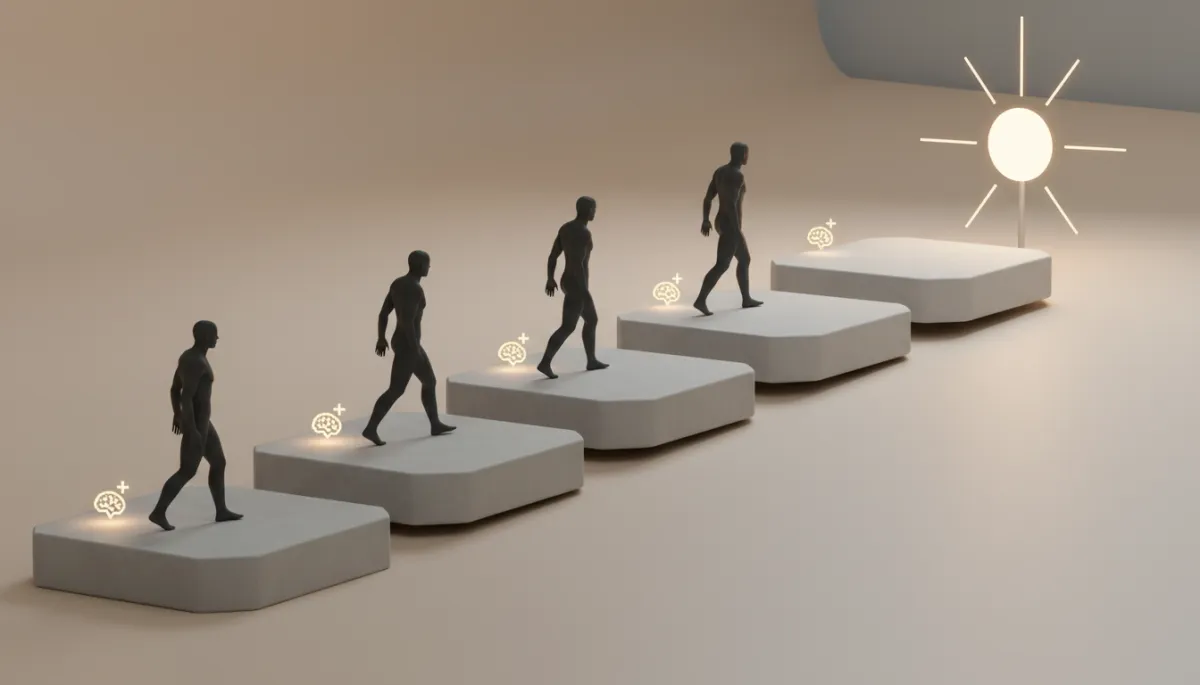
Breaking big goals into small wins keeps dopamine engaged and motivation alive.
Emotional Regulation: How Dopamine Helps Steady Your Inner World
Emotional regulation is your ability to notice, understand, and manage your feelings without being overwhelmed by them. While other chemicals like serotonin, GABA, and norepinephrine also play big roles, dopamine is deeply involved in how you respond emotionally to events—and whether you can shift your state when needed.
In the prefrontal cortex, balanced dopamine supports flexible thinking and self-control. This means you are more able to pause before reacting, reframe a situation, or choose a response that aligns with your values rather than your first impulse. When dopamine signaling is dysregulated, you might feel emotionally flat and unmotivated, or conversely, reactive and impulsive, swinging quickly between states without much sense of control.
Healthy emotional regulation does not mean you never feel sad, angry, or anxious. It means you can experience those emotions, make sense of them, and gradually return to balance. Because dopamine helps you shift from one state to another, it is a key player in that process of recovery and adjustment after emotional stress.
💡 Gentle reminder: If your emotions feel unmanageable for long periods, it is not a sign of weakness. It may be a sign that your brain chemistry, including dopamine, could use professional support from a therapist or healthcare provider.
Anxiety Management and Dopamine: The Hidden Link
When we think of anxiety management, we often focus on stress hormones like cortisol or the fight-or-flight response. Yet dopamine also influences how anxious you feel, particularly in situations involving uncertainty, risk, or potential reward. In some people, heightened dopamine activity in certain circuits can amplify the sense that “something important is at stake,” which can feel like excitement or like anxiety—depending on context and personality.
Anxiety often involves a tug-of-war between wanting to move forward and wanting to stay safe. Dopamine is involved in evaluating both the potential rewards of action and the possible costs. If your brain leans heavily toward focusing on what could go wrong, dopamine may end up reinforcing avoidance patterns—staying home, postponing decisions, or endlessly preparing without acting. Over time, this can make anxiety feel even more entrenched, because avoiding feared situations prevents you from discovering that you can handle them.
Effective anxiety management often includes gently retraining dopamine systems by pairing small, manageable steps into feared situations with realistic, positive outcomes. Each time you face a challenge and it goes better than expected, your brain updates its predictions. Dopamine helps encode that new learning, gradually shifting your internal story from “I cannot handle this” to “Maybe I can handle more than I thought.”
Approach–Avoidance: How Dopamine Guides Your Choices
At the heart of many decisions is a simple tension: approach avoidance. Do you move toward a situation, person, or goal—or do you pull back? Dopamine is a major player on the approach side of that equation. When your brain predicts that approaching something will bring reward, learning, or growth, dopamine nudges you forward. When the predicted cost feels higher than the reward, avoidance can win out, often reinforced by relief when you back away.
This plays out in everyday life: speaking up in a meeting, asking someone out, applying for a new role, or even starting therapy. Your brain quickly weighs potential embarrassment, rejection, or failure against possible connection, success, or relief. Dopamine helps tag options as “worth it” or “not worth it” based on past experiences and current expectations. If your history includes many painful outcomes, your dopamine system may be biased toward caution, making approach behaviors feel harder than they objectively are.
📌 Key takeaway: You can gradually rebalance approach–avoidance by creating repeated experiences where taking small, calculated risks leads to manageable, often positive outcomes. Over time, your brain chemistry updates, and approach becomes more natural than avoidance.
Everyday Habits That Support Healthy Dopamine Balance
While you cannot micromanage your brain chemistry, you can shape it through consistent, realistic habits. These practices do not “hack” dopamine; they respect how it naturally works over time, supporting motivation, emotional regulation, and anxiety management in sustainable ways.
Prioritize regular sleep: Dopamine follows a daily rhythm. Poor or irregular sleep can blunt its natural rise in the morning and disrupt focus, mood, and drive. Aim for a consistent sleep–wake schedule, even on weekends, to support stable brain chemistry.
Move your body: Physical activity—especially moderate, regular exercise—can increase dopamine availability and receptor sensitivity over time. You do not need intense workouts; walking, dancing, or gentle strength training can all support motivation and emotional regulation.
Choose balanced rewards: Highly stimulating activities (constant scrolling, junk food, binge-watching) create sharp dopamine spikes followed by dips, which can leave you restless and unfulfilled. Mixing in slower, deeper rewards—like reading, meaningful conversation, creative work, or time in nature—supports steadier dopamine patterns and more genuine satisfaction.
Break tasks into clear steps: Turn vague goals (“get healthier,” “be more organized”) into specific actions (“walk 15 minutes after lunch,” “sort one drawer today”). Each completed step gives your motivation and reward system a tangible success to register, reinforcing progress rather than perfection.
Practice mindful pauses: Brief moments of mindfulness—simply noticing your breath, body sensations, or surroundings—can help calm overactive stress circuits. This creates space for the prefrontal cortex, supported by dopamine, to come back online so you can respond thoughtfully rather than react automatically.
When Dopamine Goes Out of Balance
Because dopamine is involved in so many systems, imbalances can show up in different ways. On the low side, people may experience fatigue, low motivation, difficulty feeling pleasure, or trouble focusing. On the high or dysregulated side, some may feel restless, impulsive, overly driven toward risky rewards, or trapped in compulsive behaviors. Conditions like ADHD, depression, addiction, and certain anxiety disorders have all been linked to differences in dopamine signaling, though each involves many other factors as well.
It is important not to self-diagnose based solely on how you feel. Brain chemistry is complex, and similar symptoms can have different causes. If you notice persistent challenges with motivation, emotional regulation, or anxiety that interfere with your daily life, speaking with a mental health professional or physician can help you explore what is happening—and what support options, including therapy, lifestyle shifts, or medication, may be appropriate.
Using Knowledge of Dopamine to Shape a Kinder Life
Understanding dopamine does not mean you must constantly monitor your brain chemistry. Instead, it offers a more compassionate lens on your behavior and emotions. When you struggle to start a project, repeat an unhelpful habit, or feel torn between approach and avoidance, it is not simply a matter of willpower. Your brain is running predictions, weighing rewards and risks, and relying on past learning—much of it outside your conscious awareness.
By working with your dopamine system rather than against it, you can:
Design environments that make healthy choices easier and more rewarding.
Break big goals into small, achievable steps that keep motivation alive.
Gently challenge avoidance patterns by pairing small risks with realistic rewards.
Treat emotional ups and downs as signals to be understood, not failures to be judged.
Bringing It All Together: Dopamine as a Bridge Between Feeling and Doing
Dopamine sits at the crossroads of many experiences you care about: motivation and reward, emotional regulation, anxiety management, and the everyday approach–avoidance decisions that shape your life. It helps translate your inner values and expectations into outward action—or inaction. While you cannot see dopamine at work, you can feel its influence whenever you are drawn toward a goal, stuck in hesitation, or learning from what happens next.
The more you understand this quiet chemical partner, the more room you have to choose intentionally. You can honor your brain’s need for manageable rewards, gradual change, and safety, while still nudging yourself toward growth. You can see procrastination or avoidance not as proof that you are lazy or broken, but as signs that your brain’s predictions need updating—and that with small, repeated experiences of success, they can be updated.
Ultimately, dopamine is not just the “feel-good chemical.” It is a bridge between what you hope for and what you actually do, between fear and courage, between anxiety and calm. By caring for your brain chemistry through realistic habits, compassionate self-understanding, and, when needed, professional help, you give yourself a better chance to cross that bridge—again and again—toward a life that feels more aligned, meaningful, and your own. Want a worksheet just click here
