Understanding and Healing Shame in Coaching
Coaching, Trauma-Informed Practice, Emotional Healing
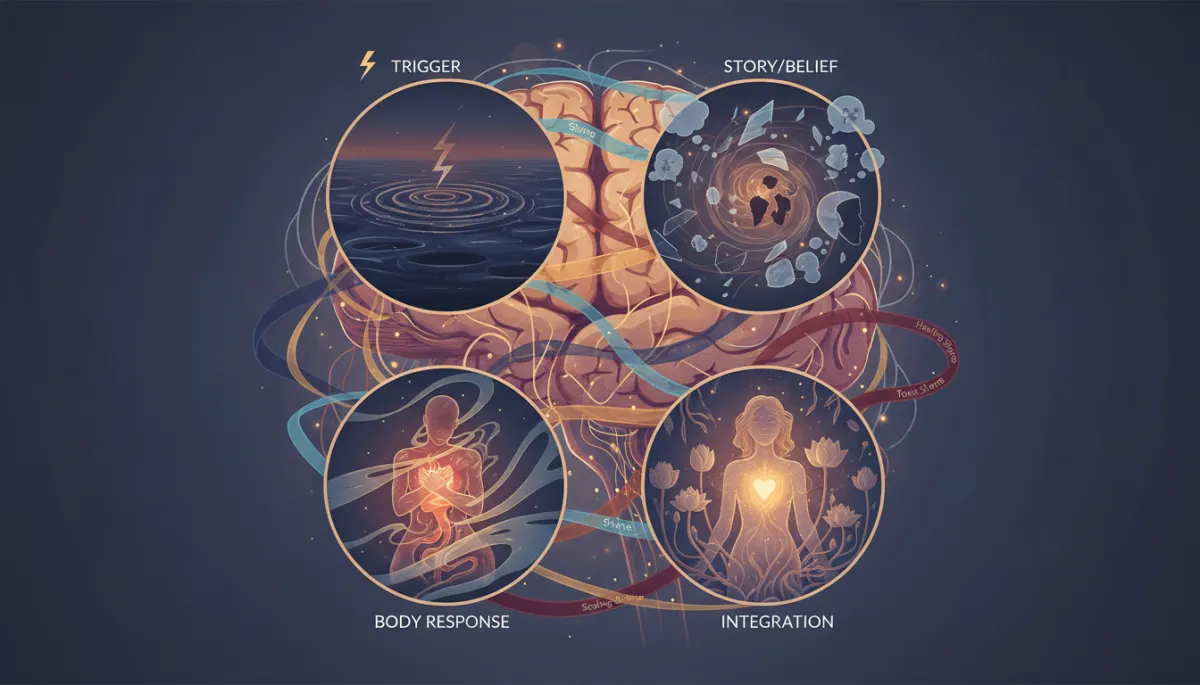
4 Levels of Shame in the Body & Brain: Guiding Clients from Trigger to Integration
As a coach or consultant, you meet clients at the edges of their growth. Often, what blocks that growth is not skill or strategy, but Shame—especially the deep, corrosive form John Bradshaw called Toxic Shame. Understanding how shame moves through the body and brain, from the first emotional trigger to full somatic integration, allows you to support profound, sustainable healing rather than surface-level change.
Shame vs. Toxic Shame: Why This Distinction Matters for Coaches
John Bradshaw described Toxic Shame as the belief that “there is something fundamentally wrong with me.” It is not, “I did something bad,” but, “I am bad.” This is crucial for anyone focused on Healing Shame. Healthy shame is a relational signal that keeps us connected to others and our values. Toxic Shame, by contrast, becomes an identity, lodged in the nervous system and reinforced by internal stories and external dynamics.
Bradshaw traced the roots of Toxic Shame to environments where a child’s needs, feelings, or boundaries were consistently shamed, ignored, or violated. Over time, the child internalizes the message: “My needs are wrong; I am wrong.” As adults, your clients may present with perfectionism, people-pleasing, self-sabotage, chronic anxiety, or a relentless inner critic. Underneath many of these patterns lies unprocessed shame in the body and brain, waiting for compassionate attention and Somatic Integration.
📌 Key Takeaway: Healthy shame says, “I made a mistake.” Toxic Shame says, “I am a mistake.” Your work is to help clients separate identity from experience.
The 4 Levels of Shame in the Body & Brain
Shame is not just a feeling in the mind; it is a full-body, multi-layered process. For practical, trauma-informed coaching, it helps to view it as moving through four interconnected levels:
Trigger – the activating event or cue (external or internal).
Body Response – the physiological and somatic reactions in real time.
Story/Belief – the meaning-making layer, often rooted in Toxic Shame narratives.
Integration – the process of digesting, updating, and healing shame through awareness, compassion, and reparenting.
As you guide clients through these levels, you move them from being flooded by shame to being able to witness, soothe, and transform it. Let’s walk through each level in detail and explore how you can work with it in session.
Level 1: The Shame Trigger – When Emotional Triggers Open Old Wounds
A shame trigger is any stimulus that reactivates an old imprint of unworthiness or defectiveness. In Bradshaw’s language, these triggers tap into the wounded inner child who still believes they are “not enough.” For your clients, Emotional Triggers can be surprisingly subtle:
A critical email from a manager or client.
Being interrupted in a meeting or not being invited to one at all.
A partner’s distracted tone or a friend’s delayed reply.
Internal cues like fatigue, a mistake, or a perceived failure.
What makes these moments painful is not the event itself, but the historical echo it awakens. A client who was repeatedly shamed for “being too much” may experience a colleague’s eye-roll as proof that they are fundamentally embarrassing. Another who grew up with emotionally unavailable caregivers may experience a partner’s quietness as confirmation that they are unlovable.
💡 Pro Tip for Coaches: Help clients name their top 3–5 recurring shame triggers. Simply mapping these patterns begins the process of Healing Shame by bringing it into conscious awareness.
Level 2: Body Response – Where Shame Lives in the Nervous System
Before the mind creates a story, the body reacts. Shame is one of the most visceral emotions. It often shows up as:
A sudden drop in energy, like the floor falling out from under you.
Heat in the face, neck, or chest; blushing or wanting to hide your face.
Tightness in the throat, chest, or gut; a collapsing posture.
Urges to disappear, apologize excessively, fawn, or freeze.
From a nervous system perspective, shame often pulls clients into a blend of fight/flight (panic, self-attack, defensiveness) and freeze (numbness, collapse). Bradshaw emphasized that Toxic Shame becomes “carried in the body” when a child has no safe adult to help metabolize it. The body then learns to brace in anticipation of humiliation or rejection, even decades later.

-toned photograph of a person sitting on a sofa with hand on chest and eyes closed, a supportive...
Somatic awareness turns shame from a vague fog into clear, workable sensation.
This is why somatic awareness is non-negotiable for Somatic Integration of shame. When clients can locate shame as sensation—“a knot in my stomach,” “a heaviness behind my eyes,” “a shrinking in my shoulders”—they can begin to relate to it rather than be overwhelmed by it. The body becomes a map, not an enemy.
💡 Practice for Sessions: When a client is activated, gently ask: “Where do you notice this in your body?” “If that sensation had a shape or color, what would it be?” This anchors the experience and invites compassionate curiosity instead of reflexive avoidance.
Level 3: Story & Belief – The Inner Script of Toxic Shame
Once the body is activated, the mind rushes in to explain why. This is where Toxic Shame shows its most recognizable face: the inner critic, the catastrophic interpretation, the old core beliefs. Bradshaw described these as “shaming scripts” that replay automatically, often word-for-word from childhood experiences.
Common shame-based beliefs include:
“I’m not enough / I’ll never be enough.”
“If people really knew me, they would leave.”
“I’m a burden / too much / too needy.”
“Any mistake proves I am a failure.”
For coaches and consultants, this is the level where mindset work is often attempted first. But without acknowledging the Trigger and Body Response, challenging beliefs can feel invalidating or purely intellectual. The client’s nervous system is still in a shame state, and the story feels true because the body is braced as if it is.
Bradshaw’s insight was that these beliefs are adaptations. A child who blames themselves for a parent’s rage or neglect actually preserves a sense of control: “If it’s my fault, maybe I can fix it.” As adults, those same beliefs become cages. Your role in Healing Shame is to honor the original function of the belief while gently updating it with reality, compassion, and new relational experiences.
💡 Coaching Question: “If this belief had a job when you were younger, what was it trying to protect you from?” This reframes shame-based stories as protective strategies rather than personal defects.
Level 4: Integration – From Toxic Shame to Somatic Integration and Self-Compassion
Integration is where Healing Shame becomes embodied and lasting. It is not about eliminating shame completely—that would strip us of a vital relational signal. Instead, Integration transforms Toxic Shame into healthy shame, self-respect, and authentic vulnerability. This level weaves together somatic awareness, self-compassion, and reparenting.
Somatic Awareness: Staying with the Body, Not the Story
In Integration, clients learn to stay present with the Body Response long enough for it to complete and soften. Rather than racing into self-attack or numbing out, they develop the capacity to notice, breathe, and gently tend to the sensations of shame. This is the heart of Somatic Integration:
Tracking sensations (heat, tightness, collapse) with curiosity.
Using grounding tools: feeling feet on the floor, lengthening the exhale, orienting to the room.
Allowing small movements: uncurling shoulders, placing a hand on the heart or belly, lifting the gaze.
Over time, the body learns that shame can be felt without annihilation. This is a profound nervous system update: “I can be seen, make mistakes, feel exposed—and still survive, still belong.” As a coach, slowing down to include the body is one of the most powerful contributions you can make to your clients’ healing.
Self-Compassion: Meeting Shame with Kindness Instead of Attack
If Toxic Shame says, “You are unworthy,” self-compassion responds, “You are human.” Bradshaw’s work emphasized that healing requires replacing the internalized shaming voice with a nurturing, affirming one. This is not about bypassing responsibility; it is about refusing to confuse behavior with identity.
In practice, self-compassion might sound like:
“Of course this hurts—anyone with your history would feel this way.”
“I made a mistake, and I’m still worthy of care and repair.”
“This part of me is scared, not bad. I can be with it.”
As a coach, you model this tone first. The way you respond when a client shares something they feel ashamed of—your pacing, your facial expression, your language—creates a new template in their nervous system. Over time, they internalize your compassion as their own, weakening the grip of Toxic Shame.
Reparenting: Giving the Inner Child What They Never Received
One of Bradshaw’s most influential contributions was the concept of reparenting—learning to become the reliable, attuned caregiver that the shame-based inner child never had. Reparenting is where the roots of Toxic Shame begin to loosen. Instead of waiting for external validation, clients practice offering themselves the mirroring, protection, and guidance they needed all along.
Reparenting practices can include:
Speaking to themselves in the second person—“You did your best today. I’m proud of you for trying.”
Imagining their younger self during a shame memory and offering comfort, protection, and validation that were missing at the time.
Setting boundaries that an ideal parent would enforce: “No, we don’t overwork to earn love,” or “We do not stay in relationships that humiliate us.”
For coaches and consultants, inviting reparenting work can be as simple as asking, “What would you have wanted an adult to say or do for you in that moment?” and then exploring how the client can offer that to themselves now. This shifts them from being trapped in old shame scenes to becoming an active agent in their own healing.
Bringing It All Together: A Practical Flow for Sessions
To integrate these four levels of Shame into your coaching or consulting work, you might use a simple, repeatable flow whenever a client hits an Emotional Trigger:
Name the Trigger: “What just happened?” or “What did you notice right before this wave hit?”
Track the Body Response: “Where do you feel this in your body?” “What is the intensity, 0–10?” Support grounding and regulation first.
Explore the Story/Belief: “What is the part of you saying about you right now?” “Does this voice sound familiar from earlier in your life?”
Support Integration: Invite somatic awareness, self-compassion statements, and reparenting imagery or dialogue. Ask, “What would a wise, loving adult say to you in this moment?”
📌 Key Takeaway for Practitioners: Working the four levels in order respects the body’s pace and honors the depth of Toxic Shame. It prevents you from leaping to mindset shifts before the nervous system is ready.
Why This Matters for Coaches and Consultants
Whether you support leaders, entrepreneurs, or private clients, you will encounter Shame in many disguises: procrastination, undercharging, over-delivering, hiding, chronic self-doubt, or harsh perfectionism. Without a clear map, it is easy to treat these as performance problems instead of signs of unhealed Toxic Shame stored in the body and brain.
By understanding the four levels—Trigger, Body Response, Story/Belief, and Integration—you can:
Create safer containers where clients feel less alone in their shame and more willing to explore it.
Avoid unintentionally reinforcing shame by rushing to solutions or “fixing” instead of witnessing and regulating.
Integrate Somatic Integration practices that help clients reclaim their bodies as allies rather than battlegrounds.
Support long-term transformation, not just short bursts of motivation that collapse when old shame patterns are triggered.
Closing Thoughts: Walking with Clients from Shame to Wholeness
John Bradshaw wrote that Toxic Shame “touches every part of our lives” when it goes unhealed. For your clients, it can shape careers, relationships, creativity, and even spiritual life. But when you understand how Shame moves through the four levels in the body and brain, you gain a compassionate, practical roadmap for change.
As you help clients recognize their Emotional Triggers, feel and regulate their Body Responses, question and update old Stories and Beliefs, and move toward Integration through somatic awareness, self-compassion, and reparenting, you are doing more than improving performance. You are accompanying them on a journey from “I am wrong” to “I am worthy, even when I struggle.” That shift is at the heart of Healing Shame—and it is one of the most powerful gifts you can offer as a coach or consultant.
Ultimately, your own relationship with Shame matters too. The more you practice Somatic Integration, self-compassion, and inner reparenting in your life, the more your presence itself becomes a healing intervention. Clients will feel it, often before they have the language to name it: a sense that their most vulnerable, ashamed parts are safe with you—and, eventually, safe with themselves.
If you would like to get some practice in click here
