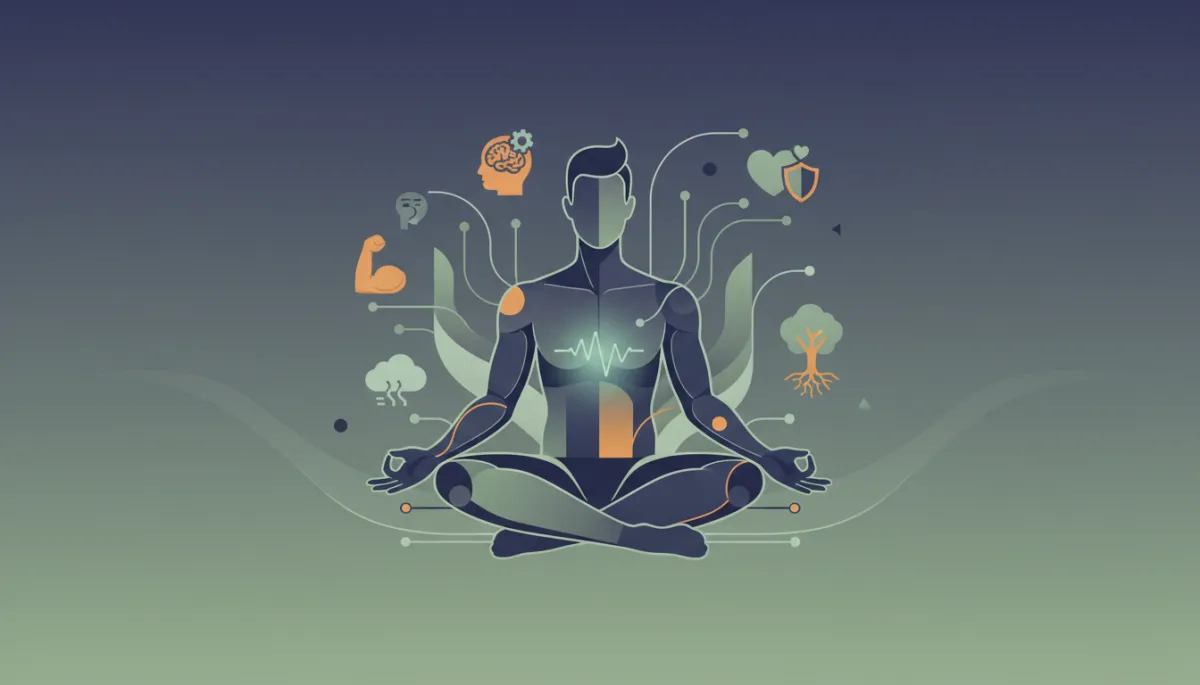
Nervous System Regulation for Men's Health
Nervous System, Stress Regulation, Men's Health, Emotional Resilience, Coping Strategies, Mind-body Connection
💪 Nervous System Regulation for Men: Real Tools That Actually Work
Men today are under pressure from every angle—work, relationships, money, health, and the constant expectation to “handle it.” Under the surface, your nervous system is working overtime. This guide breaks down how stress really works in the body and gives you practical, science-backed tools to support stress regulation, emotional resilience, and overall men’s health—without fluff, guilt, or complicated routines. 🧠🔥
Why Men Need to Care About Their Nervous System (Now More Than Ever)
If you’re like many men, you probably push through stress until your body forces you to stop—through burnout, illness, sleep problems, or emotional blowups. Underneath those symptoms is one central player: your nervous system. It’s the control center that decides whether you feel calm and focused or wired and exhausted.
When your nervous system is dysregulated, you might notice:
Constant irritability or a short fuse 😤
Trouble sleeping or waking up tired no matter what you do 😴
Brain fog, poor focus, or feeling “checked out” at work 🧩
Anxiety, racing thoughts, or feeling on edge for no clear reason ⚡
Reliance on alcohol, screens, or work to “numb out” 🍺📱
These aren’t personal failures. They’re signs your body is stuck in survival mode. The good news? You can train your nervous system—just like you train your muscles—to become more stable, responsive, and resilient. That’s what nervous system regulation is all about.
Nervous System 101: The Basics You Actually Need to Know
You don’t need a medical degree to understand your nervous system. Here’s the simple version that matters for your daily life and men’s health:
Your nervous system is like your body’s command center. It sends signals between your brain and body, deciding whether you’re safe, stressed, or in danger.
It has two main modes: fight-or-flight (sympathetic) and rest-and-digest (parasympathetic).
In fight-or-flight, your heart rate rises, muscles tense, and your body prepares to act. This is useful when you’re in danger—but many men live here 24/7 because of work, money stress, or unresolved emotions. Over time, this chronic activation wears down your immune system, hormones, and mental health.
In rest-and-digest, your body can repair, digest, sleep, and think clearly. Nervous system regulation is the art and science of helping your body shift back into this calmer state more often—and more quickly after stress hits.
💡 Key Insight: The goal is not to avoid stress (that’s impossible) but to train your body to recover from stress efficiently.
The Hidden Link Between Stress Regulation and Men’s Health 🩺
Chronic stress isn’t just “in your head.” It affects nearly every part of men’s health:
Heart health: Long-term stress raises blood pressure and inflammation, increasing risk of heart disease—the leading cause of death for men in many countries.
Hormones: Chronic cortisol (stress hormone) can lower testosterone, impacting energy, mood, libido, and muscle mass.
Sleep: A dysregulated nervous system can keep you wired at night and exhausted during the day, affecting decision-making, performance, and recovery from workouts.
Mental health: Anxiety, depression, and emotional numbness are often signs of a nervous system that’s stuck in overdrive or shutdown.
When you work on stress regulation, you’re not just “relaxing.” You’re actively investing in your heart, hormones, brain, and long-term well-being. It’s one of the most underrated performance tools men have.
Emotional Resilience: What It Really Means (Beyond “Man Up”)
Many men were taught that being “strong” means feeling less. But emotional resilience isn’t about ignoring your emotions; it’s about being able to feel them without being overwhelmed or shut down. It’s the capacity to bend without breaking—and to come back to center after life hits hard. 🛡️
A regulated nervous system is the foundation of emotional resilience. When your body feels safe, your brain can process difficult experiences more clearly. You’re less likely to explode in anger, withdraw completely, or reach for destructive coping habits. Instead, you can respond intentionally—to your partner, your kids, your boss, and yourself.
💬 Reframe: Feeling your emotions doesn’t make you weak. It gives you more information and more control.
The Mind-Body Connection: Your Body Is Not Separate from Your Feelings
One of the biggest shifts many men need to make is understanding the mind-body connection. Your thoughts, emotions, and physical sensations are not separate systems—they constantly affect each other. When your mind is stressed, your body tightens. When your body is relaxed, your mind has more space and clarity. 🧘♂️
Nervous system regulation works best when you use both:
Top-down tools: Using your mind to influence your body—like reframing thoughts, planning, or talking things through.
Bottom-up tools: Using your body to influence your mind—like breathwork, movement, cold exposure, or grounding exercises.
Many men lean heavily on top-down strategies (thinking, analyzing, problem-solving) but ignore the physical side. Real coping strategies for stress regulation need both. The tools below will help you build that bridge between mind and body.

Simple daily body-based rituals can dramatically improve emotional resilience over time.
Tool 1: Tactical Breathing to Calm Your System in 60–90 Seconds 😮💨
Your breath is one of the fastest ways to influence your nervous system. When you’re stressed, your breathing becomes shallow and fast, signaling danger to your brain. By deliberately slowing and deepening your breath, you send the opposite message: “We’re safe.”
The 4–6 Breathing Technique
This simple pattern is easy to remember and can be used before a tough meeting, after an argument, or when you feel your heart racing.
Inhale through your nose for a count of 4, letting your belly expand.
Exhale through your mouth for a count of 6, as if gently blowing through a straw.
Repeat for 10–15 breaths (about 1–2 minutes).
Longer exhales activate the parasympathetic “rest-and-digest” system, making this a powerful, quick stress regulation tool. You can even use it discreetly in public without anyone noticing.
🔧 Make it stick: Pair 4–6 breathing with a daily habit—like waiting for coffee to brew or sitting in your car before going into work.
Tool 2: Grounding Your Body When Anxiety Hits 🌍
When your thoughts are racing or you feel disconnected, grounding exercises help bring you back into your body and the present moment. This is a classic mind-body connection tool that supports nervous system regulation and emotional resilience.
The 5–4–3–2–1 Grounding Technique
Name 5 things you can see.
Name 4 things you can feel (your feet on the floor, your back on the chair).
Name 3 things you can hear.
Name 2 things you can smell.
Name 1 thing you can taste.
This pulls your attention out of your head and into your senses, signaling to your nervous system that you’re not in immediate danger. It’s especially useful during panic, intense worry, or when you feel “spaced out.”
Tool 3: Movement as Medicine for Stress Regulation 🏃♂️
Exercise is one of the most powerful, research-backed coping strategies for men. But here’s the key: it’s not just about getting ripped or hitting PRs. It’s about using movement to help your nervous system complete the stress cycle and release built-up tension from your body.
Three Types of Nervous System-Supportive Movement
Low-intensity movement (walking, light cycling, mobility work): Great for daily stress regulation and mental clarity. Aim for 20–30 minutes most days of the week.
Strength training (weights, resistance bands, bodyweight): Supports testosterone, confidence, and resilience. 2–4 sessions per week can dramatically improve men’s health.
Regulating movement (yoga, tai chi, slow stretching): Combines breath, awareness, and physical release—excellent for the mind-body connection.
✅ Tip: If you’re exhausted or burnt out, prioritize low-intensity walking and gentle mobility over hardcore workouts until your energy returns.
Tool 4: Nervous System-Friendly Sleep Habits 😴
Sleep is when your body repairs, your brain processes emotions, and your nervous system recalibrates. Poor sleep keeps you stuck in a dysregulated state—no matter how many other tools you use. Think of sleep as the charger for your emotional battery.
Three Simple Sleep Practices for Men
Consistent sleep window: Go to bed and wake up within the same 60-minute window every day, even on weekends. This stabilizes your circadian rhythm and supports hormone balance.
Screen curfew: Aim for 30–60 minutes with no phone, laptop, or TV before bed. Blue light and stimulating content keep your nervous system activated. Use this time for reading, stretching, or calm conversation instead.
Wind-down ritual: Choose a 10–15 minute routine you repeat nightly—like 4–6 breathing, journaling, or a warm shower. Over time, your body will associate this with “it’s safe to relax now.”
Tool 5: Emotional Check-Ins (Without Feeling “Soft”) 🧭
Many men are experts at ignoring their emotional state until it erupts. Regular emotional check-ins are a powerful coping strategy that keeps your nervous system from getting overloaded. Think of it as routine maintenance, not therapy-speak.
The 3-Question Daily Debrief
Once a day—maybe before bed or after work—take 3–5 minutes to ask yourself:
What am I feeling right now? (Angry, tired, anxious, numb, content—pick one word.)
Where do I feel it in my body? (Chest tightness, stomach knot, heavy shoulders.)
What do I need? (Rest, movement, conversation, boundary, food, water.)
This simple practice strengthens your mind-body connection and teaches your nervous system that emotions are signals—not threats. Over time, you’ll react less impulsively and respond more from choice.
🧱 Resilience Builder: Emotional awareness is like a muscle. The more often you check in, the stronger your emotional resilience becomes.
Tool 6: Boundaries as Nervous System Protection Shields 🛑
No amount of breathing or stretching will fully regulate your nervous system if your life is constantly overwhelming. That’s where boundaries come in. They’re not about being selfish; they’re about protecting your health, energy, and relationships in the long run.
Three Boundary Areas That Impact Men’s Stress Levels
Work: Saying no to extra projects when your plate is full, logging off at a set time, or taking your full lunch break away from your desk.
Technology: Limiting constant notifications, especially after hours, and having screen-free pockets of time during your day.
Relationships: Communicating clearly when you need space, time alone, or support—rather than withdrawing or exploding.
Healthy boundaries reduce the amount of incoming stress your nervous system has to process. They’re one of the most underrated coping strategies for men who feel constantly overloaded.
Tool 7: Support Systems and Brotherhood 🤝
Human beings are wired for connection. Yet many men try to carry everything alone. Isolation is stressful for your nervous system; connection is regulating. Strong, honest relationships are one of the most powerful factors in emotional resilience and long-term men’s health.
Trusted friends: A couple of people you can be real with—beyond sports and small talk—can dramatically reduce your stress load.
Mentors or coaches: Someone who’s a few steps ahead can help you navigate stress, relationships, and purpose.
Therapists or counselors: Working with a professional is not a last resort; it’s a smart strategy for men who want to understand and upgrade their patterns.
🤜🤛 Remember: Regulated men regulate rooms. When you invest in your nervous system, everyone around you benefits—your partner, kids, team, and friends.
Putting It All Together: A Simple Daily Nervous System Plan
You don’t need a two-hour morning routine to regulate your nervous system. What matters most is consistency, not perfection. Here’s a realistic daily framework you can adapt to your life:
Morning (5–15 Minutes)
1–3 minutes of 4–6 breathing before checking your phone.
Light movement—stretching, a short walk, or a few mobility drills.
Quick emotional check-in: “How am I feeling? What do I need today?”
During the Day (Micro-Resets)
1–2 minutes of tactical breathing before or after stressful events (meetings, tough conversations, traffic).
Short walks or movement breaks every 60–90 minutes if possible.
Notice tension in your body (jaw, shoulders, hands) and intentionally release it.
Evening (15–30 Minutes)
3-question emotional debrief to process the day.
Light stretching, yoga, or a slow walk to discharge stress from your body.
Screen-free wind-down ritual to support deep, restorative sleep.
When to Seek Extra Support (and Why It’s a Power Move) 🧠
Self-regulation tools are powerful, but they’re not always enough on their own—especially if you’ve been under heavy stress for years, have a history of trauma, or are dealing with intense anxiety or depression. Reaching out for help is not a sign that you’re failing; it’s a sign that you’re serious about your life and your health.
Talk to a healthcare provider if you’re experiencing chest pain, severe sleep issues, or ongoing physical symptoms with no clear cause. Your nervous system may be asking for attention through your body.
Consider therapy, coaching, or men’s groups if you feel stuck in the same emotional patterns, struggle to open up, or feel like you’re living on autopilot.
⚠️ Important: If you ever have thoughts of harming yourself or feel like you’re at a breaking point, reach out to a crisis line or trusted person immediately. Your life is worth protecting.
Becoming the Calm in the Storm: A New Standard for Men’s Health
Nervous system regulation isn’t about becoming perfectly zen or never feeling stressed again. Life will always bring pressure, uncertainty, and challenge. The difference is whether you’re constantly at the mercy of those forces—or whether you have the tools, awareness, and support to meet them from a grounded place.
By practicing these tools—breathwork, grounding, movement, sleep habits, emotional check-ins, boundaries, and connection—you’re not just managing stress. You’re redefining what strength looks like. You’re building true emotional resilience, upgrading your mind-body connection, and investing in the kind of men’s health that lasts decades, not just months.
Start small. Pick one or two tools from this guide and commit to using them daily for the next two weeks. Notice how your body feels, how your reactions shift, and how your relationships respond. Over time, these small practices stack up into a powerful nervous system that can handle more, recover faster, and stay grounded under pressure. 💪
Your nervous system is not your enemy; it’s your ally. When you learn to work with it instead of against it, you don’t just survive stress—you grow through it.
This content is for educational and informational purposes only and is not a substitute for professional mental health treatment, diagnosis, or individualized clinical advice. If you are experiencing significant distress or a mental health crisis, please seek support from a qualified mental health professional or emergency service in your area.
