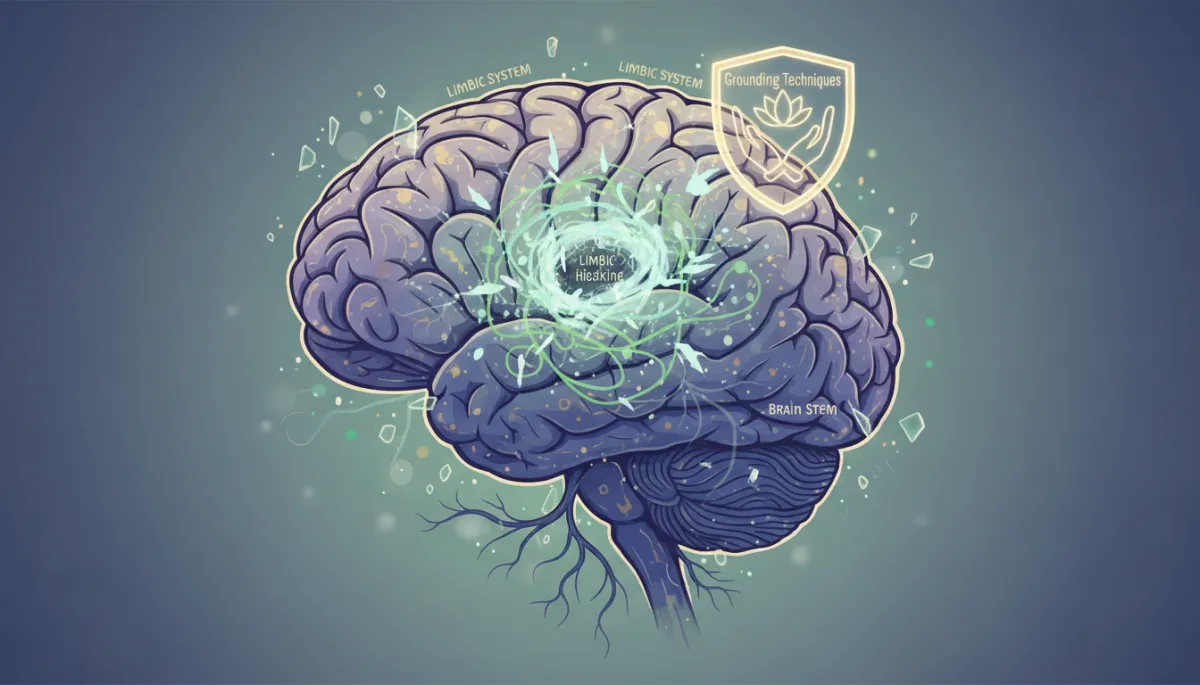
Understanding Trauma: Brain's Legacy Code Explained
Trauma Storage, Brain Development, Emotional Regulation, Limbic Hijacking, Grounding Techniques
Hysterical Is Historical: How the Brain Stores Early Wounds (Explained Like a Developer)
When your reaction to a small trigger feels wildly “over the top,” it can seem irrational or even broken. In trauma work there’s a phrase for this: “hysterical is historical.” As a senior software engineer, I find it helpful to explain this through the lens of system architecture, data storage, and debugging. Your brain is not misbehaving; it’s running legacy code written during earlier, more dangerous versions of your life.
The Brain as a Layered System: Bottom-Up Development
In engineering, we often build from the bottom up: low-level services first, then business logic, then UI. Brain development follows a similar pattern. Three main layers matter for understanding Trauma Storage and emotional reactions:
The Brain Stem – low-level survival functions, like the OS kernel
The Limbic System – emotional and relational “middleware”
The Prefrontal Cortex – high-level reasoning, like your UI plus business rules
These layers don’t all come online at once. The bottom layers are built and deployed first. Early experiences, especially early woundings or trauma, are written into those lower layers before the “smart” parts of your brain are fully available to interpret or moderate what’s happening. That’s a key reason why present reactions can be rooted in past trauma and feel so hard to reason your way out of.
The Brain Stem: Your Non-Negotiable Survival Kernel
The Brain Stem is like the kernel of your operating system. It manages non-negotiable processes: breathing, heart rate, basic arousal, fight–flight–freeze responses. It doesn’t care about nuance or long-term strategy; its only job is “keep the system alive right now.”
Early trauma—such as neglect, chronic stress at home, or medical procedures in infancy—can tune the brain stem’s thresholds. It’s like setting the default configuration file for how easily the system should enter panic mode. If your early environment was unpredictable or unsafe, your brain stem may have learned:
“Assume danger by default.”
“React fast; we can’t afford to wait for more data.”
This is one way Trauma Storage shows up: not as a conscious memory, but as default settings in your autonomic nervous system. Your heart races in a meeting, your muscles tense when someone raises their voice, even if you “know” you’re safe. The kernel is running old configuration, and it doesn’t consult your conscious reasoning before acting.
The Limbic System: Emotional Database and Alarm System
Above the brain stem sits the Limbic System, home to structures like the amygdala and hippocampus. If the brain stem is the kernel, the limbic system is a combination of:
An alarm service that detects threat and broadcasts alerts
An emotional database that stores patterns: “When X happens, feel Y”
During childhood, the limbic system is very active while the Prefrontal Cortex is still under construction. That means early woundings are stored primarily as emotional states and body sensations, not as neat, timestamped logs with clear narratives. The system saves something like:
Your limbic system stores early threat patterns as emotional “records” tied to body states rather than clear stories your adult mind can recall.
Years later, your partner raises their voice slightly in frustration, and your limbic system does a fast pattern match: “This looks like raised_voice. Last time this happened, we almost didn’t survive. Trigger terror_freeze.” That’s Hysterical Historical in action: the intensity of the present emotion reflects the historical wound, not the current situation.
The Prefrontal Cortex: Rational “Frontend” with Limited Permissions
The Prefrontal Cortex (PFC) is the part of your brain that handles planning, empathy, impulse control, and perspective-taking. In software terms, it’s your frontend plus high-level business logic. It can:
Evaluate context: “Is this actually dangerous, or just uncomfortable?”
Inhibit impulses: “I want to yell, but I’ll pause and breathe instead.”
Reframe: “My manager’s feedback is not an attack; it’s information.”
The challenge is that the PFC is a late-deploying feature. It continues developing well into your mid-twenties. By the time it’s mature, the brain stem and limbic system have already accumulated years of configuration and data—your early Trauma Storage. When stress is low, your PFC can negotiate with those lower systems. When stress is high, something else happens: limbic hijacking.
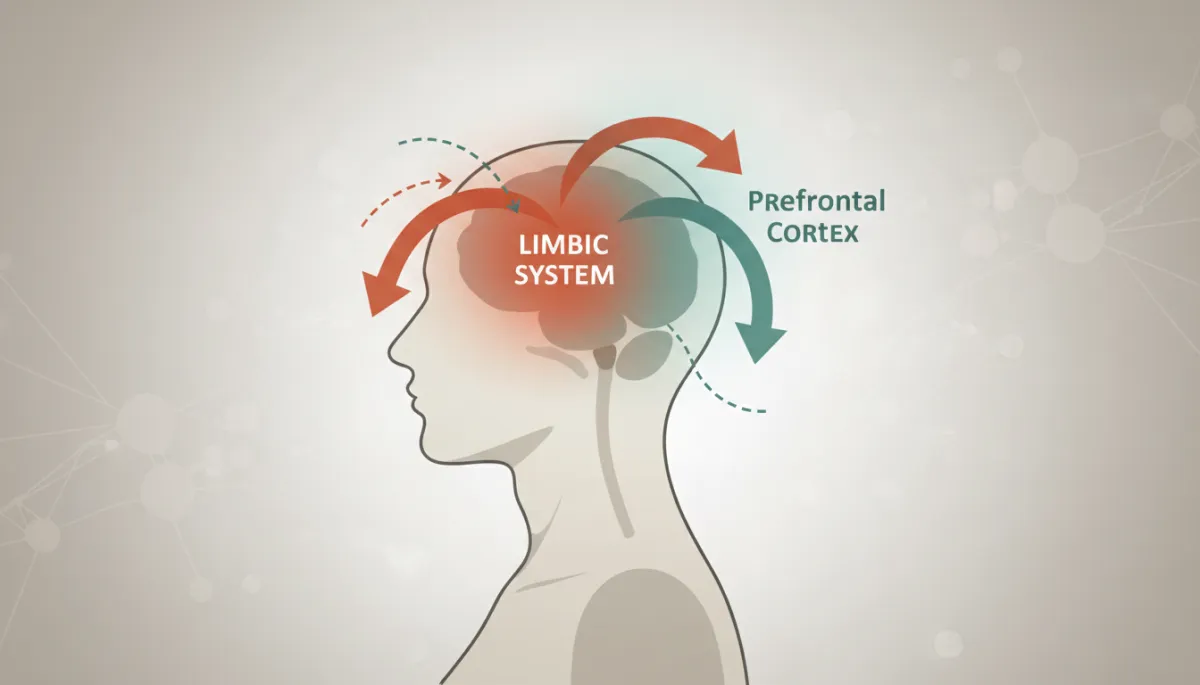
Under high stress, emotional circuits can temporarily bypass your rational decision-making.
Limbic Hijacking: When Old Code Seizes Control
Limbic hijacking is what happens when the limbic system detects a threat (real or perceived) and grabs control of the system before the Prefrontal Cortex can weigh in. It’s like an emergency interrupt that suspends normal processing and forces the CPU to run a critical handler.
In code, it might look like this simplified model of your internal “threat detection” pipeline:
In plain English:
Something happens—a tone of voice, expression, memory, sensation, or situation.
The limbic system quickly compares it with past experiences.
If it resembles danger, the brain activates fight, flight, freeze, or fawn.
Careful reasoning temporarily takes a back seat.
If the situation feels safe enough, the prefrontal cortex can assess it more thoughtfully.
One small accuracy improvement: the prefrontal cortex usually isn’t completely “bypassed.” Under high stress, its regulatory influence becomes reduced.The key problem in trauma is that the threat-detection patterns were trained on past danger and may not have been updated. So your limbic system may mark things as “threat” that your adult self would not. That’s where the sense of “I know I’m safe, but my body doesn’t believe me” comes from. Your present reaction is rooted in past trauma because the limbic system is still using historical data as if it were current.
Hysterical Is Historical: Why Your Reaction Makes Sense in Context
When you have a big emotional reaction to a small present event, it’s easy to judge yourself: “I’m overreacting,” “I’m broken,” “I should be able to handle this.” But if we look at it as engineers of our own nervous systems, a different picture emerges:
The Brain Stem is executing survival defaults tuned in childhood.
The Limbic System is matching current stimuli against an old dataset of pain and fear.
The Prefrontal Cortex may be temporarily offline due to limbic hijacking.
Your reaction is not random; it is historically consistent with what your system learned it needed to do to survive. That’s the heart of the Hysterical Historical concept. The intensity of the emotion belongs to an earlier chapter of your life, even though it’s being replayed in the current scene.
Why Grounding Comes Before Deep Trauma Work
If you’re someone seeking understanding and healing of trauma, it can be tempting—especially if you’re analytical—to dive straight into the deepest memories, like trying to refactor the entire legacy codebase in one sprint. But from a nervous system perspective, this is unsafe if your lower layers (brain stem and limbic system) are already near capacity.
Grounding techniques are like stabilizing the infrastructure before doing a heavy database migration. They help:
Bring the brain stem out of red-alert mode (regulating breath, heart rate, muscle tension)
Signal to the limbic system: “We’re in the present, not the past”
Re-engage the Prefrontal Cortex so you can observe, not just relive, your experience
💡 Pro Tip: If you’re working with trauma, “slow is fast.” Ground first, then process. Without grounding, deep work can feel like DDoSing your own nervous system.
Practical Grounding Techniques (Nervous System “Debugging Tools”)
Here are some concrete Grounding Techniques you can think of as debugging tools for your nervous system. They don’t erase trauma, but they change the runtime conditions so you can work with it more safely.
1. Breath as a System Call to the Brain Stem
Slow, deep breathing—especially exhaling longer than you inhale—directly affects the brain stem and vagus nerve. It’s like sending a “safe mode” command to your survival system. One simple pattern:
Inhale through the nose for 4 seconds
Hold for 2 seconds
Exhale through the mouth for 6 seconds
2. Sensory Grounding: Re-Anchor to the Present “Environment Variables”
When limbic hijacking pulls you into a past state, your system behaves as if the old environment is still active. Sensory grounding updates your “environment variables” to the current moment. A simple 5-4-3-2-1 protocol:
Name 5 things you can see
4 things you can feel (e.g., chair, clothes, floor)
3 things you can hear
2 things you can smell
1 thing you can taste
3. Self-Talk API: Let the Prefrontal Cortex Back In
Once your body is a bit calmer, you can invite the Prefrontal Cortex to rejoin the process through gentle, factual self-talk. Think of it as writing a small wrapper function around your raw emotional response:
Notice what triggered you.
Check what’s happening in your body.
If you’re overwhelmed, slow your breathing and reconnect with your senses.
Remind yourself: “Something old got activated. I am in the present now.”
Name the trigger without letting it control the moment.The goal isn’t to suppress emotion but to add context. “I’m feeling 10/10 fear, and I’m sitting at my desk. This fear belongs to an earlier chapter, and I’m safe enough right now to breathe.”
Updating Old Patterns: Gentle Refactoring of Trauma Storage
Over time, with support (often from a therapist trained in trauma), you can begin to update the stored patterns in your limbic system. This is less like deleting code and more like adding new test cases and gradually refactoring. Each time you:
Notice a trigger
Ground your body
Stay present with the feeling without abandoning yourself
…you are effectively saving a new record in your emotional database: “This time, the trigger happened, and I stayed safe.” Repetition teaches the limbic system that the old mapping (raised_voice → terror) is no longer always accurate.
For Engineers and Analytical Minds: Turning Compassion into a Feature
If you’re an engineer or someone who thinks in systems, it can be tempting to treat yourself like a bug you need to fix. But the more we understand Brain Development from the bottom up, the clearer it becomes that your reactions are logical outcomes of earlier constraints, not personal failures.
The Brain Stem did what it needed to keep you alive.
The Limbic System stored patterns based on incomplete data and limited tools.
The Prefrontal Cortex arrived late to the project but can now help with refactoring.
Compassion, in this frame, is not sentimentality; it’s accurate modeling. You’re acknowledging the constraints under which the original system was built. From there, healing becomes a series of small, respectful updates: grounding, noticing, feeling, and slowly rewriting how your nervous system responds.
Bringing It All Together: A Roadmap for Healing
To summarize the architecture of Hysterical Historical reactions and how to work with them:
Understand the stack. Brain development is bottom-up: Brain Stem → Limbic System → Prefrontal Cortex. Early woundings are stored in the lower layers first.
Recognize limbic hijacking. When emotions spike and logic vanishes, assume the limbic system has temporarily seized control based on historical data.
Ground before deep work. Use breathing, sensory awareness, and compassionate self-talk to bring the system back into a window where the Prefrontal Cortex can participate.
Refactor gently. With support, revisit old patterns in small pieces, letting your body experience safety in situations that used to feel dangerous.
If you’re on a healing journey from trauma, you’re not trying to erase your history. You’re teaching your nervous system that the deployment environment has changed. What was once adaptive may now be painful, and with time, patience, and grounding, those old survival strategies can relax. Your brain is remarkably plastic; even long-standing patterns can shift.
Most importantly, when you notice a reaction that feels “too big,” you can remember: hysterical is historical. Instead of asking, “What’s wrong with me?” you might ask, “What happened to me—and how is my system still trying to protect me?” That question alone can be the beginning of both understanding and genuine healing. Worksheet included here
